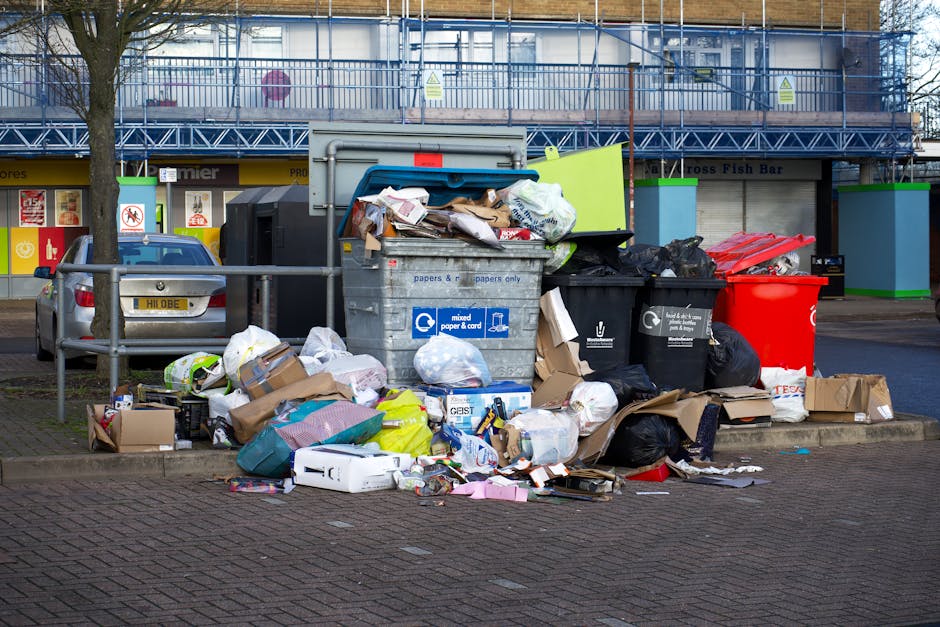
Commercial Waste Duty of Care in Lewisham: What to Know
If you run a shop, office, cafe, workshop, or building project in Lewisham, commercial waste duty of care is one of those things that can slip under the radar until it causes a headache. Then it becomes very real, very quickly. In plain English, it means you are responsible for your business waste from the moment it is created until it is handed to the right person, in the right way, and ends up at the right place. That matters whether you are dealing with paper, packaging, broken furniture, mixed office waste, or builders' rubble.
This guide explains Commercial Waste Duty of Care in Lewisham: What to Know in a practical, local way. You will find what it means, why it matters, how to handle it properly, the mistakes people make, and the checks that help you stay on the safe side. No fluff. Just the useful bits, with a few real-world pointers along the way.
Contents
- Why Commercial Waste Duty of Care in Lewisham Matters
- How Commercial Waste Duty of Care Works
- Key Benefits and Practical Advantages
- Who This Is For and When It Makes Sense
- Step-by-Step Guidance
- Expert Tips for Better Results
- Common Mistakes to Avoid
- Tools, Resources and Recommendations
- Law, Compliance, Standards, or Best Practice
- Options, Methods, or Comparison Table
- Case Study or Real-World Example
- Practical Checklist
- Conclusion
- Frequently Asked Questions
Why Commercial Waste Duty of Care in Lewisham Matters
Duty of care is not just a bureaucratic phrase. It is the practical responsibility every business has to make sure its waste is handled safely, legally, and traceably. In Lewisham, where businesses range from high street retailers to offices, trades, landlords, hospitality venues, and small independent studios, waste can build up fast. Boxes in the back room, packaging from deliveries, old shelving, plasterboard, damaged desks, food waste, or renovation debris all need different handling.
If you get this wrong, the risk is not only environmental harm. You could also face complaints from neighbours, missed collections, messy storage areas, reputational damage, or worse, the unpleasant discovery that your waste has been fly-tipped somewhere and traced back to you. That last part is the one people often underestimate. It feels remote until it is not.
There is also a simple business reason to care: tidy waste management usually means fewer surprises, less clutter, and better control. A back office with no piles of cardboard near the fire exit is easier to work in. A site with segregated materials is easier to clear. A shop that stores waste properly tends to feel more professional, too. Small thing, big difference.
Key takeaway: duty of care is about proving you took reasonable steps. Not perfection. Reasonable, consistent, documented steps.
How Commercial Waste Duty of Care Works
At its core, the process is straightforward. You produce commercial waste. You store it safely. You pass it to a suitable carrier or service. You keep enough information to show what happened. In practice, the trick is getting each step right without overcomplicating it.
For many Lewisham businesses, the workflow looks something like this:
- Identify the waste type. Is it general business waste, recyclable cardboard, confidential paper, electrical items, bulky furniture, or construction waste?
- Separate what you can. Mixing everything together makes compliance and recycling harder.
- Store waste safely. Keep it contained, away from access routes, and not somewhere it can spill, smell, or attract pests.
- Use an appropriate collector. Your waste should go to someone who is equipped and authorised to deal with it properly.
- Keep records. Retain receipts, transfer notes, or collection details where appropriate so you can show due diligence if needed.
That sounds simple, and often it is. But the detail matters. For example, an office clearing out old desks before a move is not the same as a cafe disposing of food waste or a contractor removing mixed building materials after a refurbishment. Different waste streams need different handling. Obvious? Yes. Ignored? Also yes, all the time.
If your business uses a dedicated service, it helps to work with a provider that understands local commercial waste removal expectations. For larger or ongoing business needs, a page like business waste removal can help you think through the right model for regular collections, while waste removal is useful when you need a broader overview of clearance options.
Key Benefits and Practical Advantages
People usually think of duty of care as a compliance issue first. Fair enough. But there are practical benefits too, and they matter just as much on a busy weekday morning when the bins are already full.
- Less risk of fly-tipping link-back. If waste leaves your site through the wrong route, it can come back to haunt you.
- Cleaner, safer premises. Waste that is stored neatly is less likely to block exits or create trip hazards.
- Better recycling outcomes. Segregating cardboard, wood, metal, and general waste makes it easier to recover useful materials.
- Clearer cost control. Knowing what you throw away helps you avoid paying more than necessary for mixed waste handling.
- Smoother inspections and audits. If someone asks how waste is handled, you are not scrambling through old emails.
- Better day-to-day efficiency. Teams waste less time moving piles around or making awkward judgments about what goes where.
For some businesses, especially smaller ones, the biggest benefit is peace of mind. Truth be told, that is not a small thing. You do not want to be second-guessing whether a contractor left waste in the wrong place, or whether that broken chair was logged properly. You want a process that quietly does its job.
And if your waste stream includes bulky items, an internal route to services like furniture disposal or furniture clearance can be helpful when offices, shops, or reception areas are being refreshed.
Who This Is For and When It Makes Sense
Almost any business in Lewisham that produces waste has a duty of care, but the day-to-day shape of that duty changes depending on what you do. A small design studio does not need the same system as a builders' merchant. Still, both need one.
This is especially relevant if you are:
- a retailer with packaging and display waste
- an office managing paper, furniture, and electrical items
- a landlord or property manager handling clear-outs between tenancies
- a cafe, takeaway, or hospitality business with frequent waste movement
- a contractor or tradesperson producing rubble, timber, offcuts, or mixed site waste
- a school, clinic, studio, or community organisation with regular commercial waste streams
It also makes sense when you are doing anything slightly bigger than ordinary bin use. For example, if you are clearing a loft, garage, or back room as part of a business move, a lot of waste categories can appear at once. One minute it is dusty cardboard. The next it is old shelving, broken chairs, and a weird cable box nobody has seen since 2014.
That is where a more tailored clearance approach may be more sensible. Depending on the job, relevant services such as office clearance, builders waste clearance, or even garage clearance can support a more organised process. Not every business needs the same thing, and that is fine.
Step-by-Step Guidance
If you want a sensible way to stay on top of commercial waste duty of care, use the following approach. It keeps things practical and avoids overthinking.
1. Map your waste streams
Start by listing the main types of waste your business produces. Keep it simple. General waste, dry mixed recycling, confidential paper, food waste, bulky items, and construction or refurbishment waste are the most common categories.
2. Decide what must be separated
Not everything should be thrown into one container. Some waste can be recycled cleanly if it is separated early. Other materials, like contaminated items or mixed construction debris, may need special handling.
3. Choose the right storage point
Waste should be kept where it is easy to collect and hard to interfere with. That means safe access, tidy stacking, and nothing blocking doors or walkways. If it starts to smell, attract pests, or spill into public areas, you have already lost control a bit.
4. Check who is taking it away
You need confidence that your waste collector is appropriate for the material they are taking. Ask questions. How is it handled? What happens to recyclable material? What records do they provide? If their answer sounds vague, that is your cue to slow down.
5. Keep a record trail
Keep notes of collections, invoices, transfer paperwork where relevant, and any supporting emails. This is not glamorous work, granted, but it is one of the best habits you can build. Future-you will be grateful.
6. Review the system after changes
Business waste changes all the time. New staff, refits, extra stock, a busy season, a renovation, a change in suppliers. Review your waste setup whenever the business changes shape, even a little.
To make this easier, many businesses also align waste management with broader housekeeping and safety routines. That is why pages such as health and safety policy and insurance and safety can sit naturally alongside your internal procedures. Waste is not isolated from the rest of the building. It never is.
Expert Tips for Better Results
Over time, the best waste systems are usually the boring ones. Predictable, documented, and easy for staff to follow. Here are a few habits that make a real difference.
- Label containers clearly. People should not need a detective hat to work out what goes where.
- Use one simple waste owner. Someone internally should be responsible for checking the process, even if collections are outsourced.
- Photograph any unusual loads. This helps when explaining what was removed and why.
- Train new staff early. A five-minute explanation on day one can prevent months of confusion.
- Keep bulky items out of circulation. Old desks, broken chairs, and dead printers tend to migrate into corners. Deal with them quickly.
- Separate "temporary" waste areas from working space. Temporary has a habit of becoming permanent if nobody watches it.
One small but useful habit is to do a quick end-of-day visual sweep. Two minutes near closing time can catch a lot: stray packaging, tied-up sacks left in the wrong spot, or a pallet leaning in a silly way. Not exactly thrilling, but it saves hassle.
If your business has regular bulky waste, a service line like furniture disposal can be useful when you are replacing office seating, storage units, or reception furniture. And for ongoing recycling-minded planning, recycling and sustainability is a helpful reference point for making better disposal choices.
Common Mistakes to Avoid
Most compliance problems do not start with bad intent. They start with rushed decisions. Someone is busy, the waste area is messy, and a shortcut feels harmless. Then the shortcut becomes the process. That is how trouble sneaks in.
- Assuming all waste is the same. Mixed waste is not automatically wrong, but it often costs more and reduces recycling options.
- Leaving waste unsecured. If it can blow away, spill, or be accessed by the public, you have a problem.
- Using an unverified collector. If you cannot show who took the waste, that is weak ground.
- Not keeping records. Paperwork may feel dull, but it is the evidence trail.
- Storing waste too long. Backlogs create fire, hygiene, and pest issues.
- Ignoring bulky items. One broken cabinet can sit there for weeks, oddly enough, until everyone just walks around it.
- Forgetting contractor waste. If builders or fit-out teams are generating waste on your premises, responsibilities can become blurred. They should not be left to drift.
A common local issue is the "we'll deal with it later" pile. In a small shop or office, a pile of broken fittings can grow quietly in the corner and become part of the decor. It is funny for about two days. Then it is just clutter. Better to clear it while the job is still manageable.
Tools, Resources and Recommendations
You do not need a complicated system to manage duty of care well. In most cases, a few basic tools and habits are enough.
- A waste log. This can be a spreadsheet or even a simple internal record of collections, waste types, and dates.
- Clear labels. Labels for recycling, general waste, confidential paper, and bulky items reduce confusion.
- Collection checklists. A short pre-collection checklist helps staff confirm what is going out.
- Site photos. Useful for unusual items, large clear-outs, or pre/post collection records.
- Staff brief notes. Keep it simple enough that people actually use it.
From a service perspective, it is often useful to align your waste arrangements with the kind of clearance you need. For example, a business that is reconfiguring an office might need office clearance, while a premises undergoing minor refurbishment may lean toward builders waste clearance. If your needs are broader and you are handling mixed item removal, waste removal is the broader umbrella term to consider.
It can also help to work from internal company policies. A well-written terms and conditions page is not just legal housekeeping; it can clarify responsibilities between you and the service provider. Small detail, big clarity.
Law, Compliance, Standards, or Best Practice
This topic touches regulation, so caution matters. In the UK, businesses are generally expected to take reasonable steps to ensure waste is stored, transferred, and handed over responsibly. That includes making sure the person taking your waste is suitable, the waste goes to an appropriate destination, and you retain enough information to show what you did.
For Lewisham businesses, the practical best practice is to treat duty of care as an everyday operating standard, not just a legal phrase buried in a policy folder. That means:
- checking waste is described correctly
- avoiding uncontrolled storage
- keeping movement records where relevant
- separating recyclable and non-recyclable streams where practical
- being especially careful with mixed, bulky, or potentially hazardous items
If your waste includes items such as electrical equipment, sharp materials, chemicals, or contaminated materials, the level of care should increase. In those cases, do not guess. Get the handling right first. Compliance is not the place for improvisation.
Best practice also means having a clear internal policy that staff can follow. That is where pages like health and safety policy and modern slavery statement can support wider due diligence across your organisation, especially if you work with multiple suppliers or contractors.
Options, Methods, or Comparison Table
Different businesses in Lewisham use different methods depending on volume, waste type, and how often waste is generated. Here is a simple comparison that may help you choose what fits best.
| Method | Best for | Strengths | Watch-outs |
|---|---|---|---|
| In-house bins and staff handling | Small, low-volume waste streams | Low effort, easy day-to-day control | Can become messy if staff are not trained |
| Regular commercial collection | Shops, offices, cafes, and ongoing waste | Predictable, simple, easier record keeping | Needs periodic review as volumes change |
| One-off clearance | Moves, refurbishments, stock changes | Good for bulky or mixed loads, quick reset | Needs careful waste sorting and paperwork |
| Specialist bulky-item removal | Furniture, fixtures, larger equipment | Efficient for awkward items | Must match service to item type |
If you are dealing with premises furniture or old fixtures, it is often worth comparing the approach with furniture clearance or furniture disposal. For residential-style mixed clear-outs connected to business-owned property, services like house clearance or home clearance may also be relevant, depending on the situation. That is not always obvious at first glance, but it matters when the waste is a bit of everything.
Case Study or Real-World Example
Picture a small independent office in Lewisham preparing for a reorganisation. The team has old desks to remove, several broken task chairs, cardboard from new equipment deliveries, and a stack of obsolete files. Nothing dramatic. Just the usual build-up after a busy year.
At first, the waste gets parked in a corner because everyone is busy. Then the corner becomes crowded, and the route to the store cupboard narrows. Someone nudges a box with a bin bag by mistake, and suddenly the area looks untidy and awkward. The office manager realises the job needs more than a quick bin run.
So they separate the cardboard, place the confidential papers for secure handling, and arrange removal for the bulky furniture. They keep a record of what left, when it left, and who handled it. The end result is calmer, tidier, and easier to explain if anyone asks questions later. More importantly, it stops becoming a recurring problem.
That same logic works for a shop refit, a cafe storage clear-out, or a contractor managing mixed site waste. Different setting, same principle: deal with waste early, sort it sensibly, keep the trail, and do not let the back-of-house area become a mystery zone.
Practical Checklist
Use this checklist before, during, or after any business waste collection in Lewisham. It is simple on purpose.
- Have I identified the waste type correctly?
- Have I separated recyclables from general waste where practical?
- Is the waste stored safely and securely?
- Are access routes clear?
- Is the collection provider suitable for the waste being removed?
- Do I know where the waste is going?
- Have I kept the relevant record, receipt, or transfer note?
- Have staff been told what to do with unusual items?
- Do bulky items need a dedicated clearance service?
- Has the waste area been checked for spill, smell, or obstruction?
- Do I need to update my process after this collection?
If you can tick most of these without hesitation, you are in a much better place. If not, no drama. Just tighten the process. That is usually enough.
Conclusion
Commercial waste duty of care in Lewisham is really about control, clarity, and common sense. You do not need a complex system, but you do need a reliable one. Know what waste you produce, keep it stored safely, hand it over properly, and keep the records that prove you did the right thing. That is the backbone of good practice.
For most businesses, the real win is not simply avoiding problems. It is creating a tidier, safer, more manageable working environment that feels easier to run. And honestly, once your waste system is working properly, you barely think about it again. Which is exactly how it should be.
If you are reviewing your current setup, looking at a one-off clear-out, or trying to get a better handle on business waste in the area, it is worth taking the next step now rather than later. A small improvement today can save a lot of fuss next month.
Get a free quote today and see how much you can save.
Frequently Asked Questions
What does commercial waste duty of care mean in practice?
It means your business is responsible for its waste from creation to final handover. You need to store it safely, pass it to an appropriate collector, and keep enough records to show you acted responsibly.
Does every business in Lewisham need to follow duty of care rules?
Yes, any business that produces waste should follow duty of care principles. The amount of paperwork and the type of handling may vary, but the basic responsibility is the same.
What records should I keep for commercial waste collections?
Keep collection receipts, transfer notes where relevant, invoices, and any internal notes that show what was removed, when, and by whom. The exact record set depends on the waste type and service arrangement.
How do I know if a waste collector is suitable?
Ask how they handle the waste, what happens to recyclable material, and what records they provide. If they cannot explain the process clearly, that is a warning sign.
Is mixed waste a problem?
Not always, but it often costs more and reduces recycling opportunities. It can also make your records less useful. Separating waste streams where practical is usually the better route.
What happens if waste is fly-tipped after I hand it over?
If you did not take reasonable steps to check who was collecting it, you may still have trouble. That is why documentation and provider checks are so important.
When should I use a one-off clearance instead of regular collection?
Use a one-off clearance for office moves, refurbishments, stock changes, or bulky waste that is not part of your normal routine. Regular collections are better for ongoing waste generation.
Can office furniture be treated as ordinary commercial waste?
Sometimes, but bulky items are often easier and safer to handle through a dedicated furniture or office clearance route, especially when several items need removing together.
What is the biggest mistake businesses make with waste duty of care?
The biggest mistake is assuming someone else has it covered. If you do not check storage, collection, and records, the responsibility has not really gone anywhere.
How often should I review my waste process?
Review it whenever your business changes, such as after a fit-out, staffing change, expansion, or seasonal increase in waste. Even without changes, an occasional review is smart.
Do I need special handling for builders' waste?
Yes, construction and refurbishment waste often needs more careful sorting and handling than ordinary office waste. For mixed site material, a more suitable route such as builders waste clearance is usually the cleaner option.
Where can I find more practical information about related services?
You can look at pages such as business waste removal, office clearance, waste removal, and recycling and sustainability to understand how different service types support a compliant waste setup.