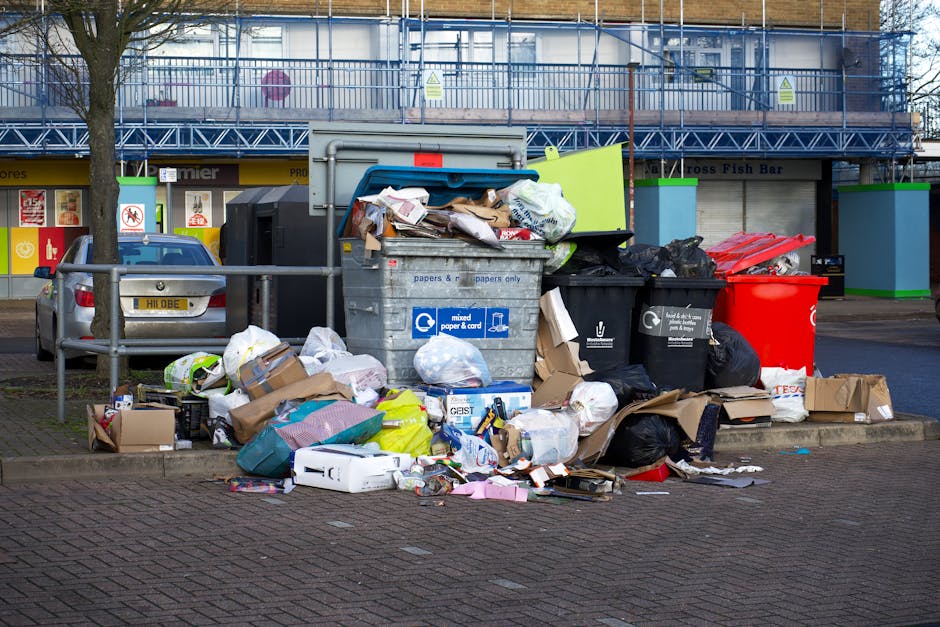
Lewisham Council Rules for Rubbish: Permits, Fines and Schedules
If you live or work in Lewisham, rubbish rules can become surprisingly important very quickly. Miss a collection day, put the wrong bin out, leave a sofa on the kerb, or arrange a skip without the right permission, and you may end up with a messy street, a warning, or an avoidable fine. This guide to Lewisham Council Rules for Rubbish: Permits, Fines and Schedules explains the practical side of waste in plain English: what usually needs permission, how local collection schedules work, what can trigger penalties, and how to stay on the right side of the rules without making a meal of it.
We will also cover the everyday stuff people actually need: bulky waste, builders' waste, garden clearances, furniture disposal, and the sort of timing and planning that saves time on a busy weekday morning. Let's face it, nobody wants to drag a heavy wardrobe to the pavement only to discover it is not collection day.
Contents
- Why Lewisham Council Rules for Rubbish: Permits, Fines and Schedules Matters
- How Lewisham Council Rules for Rubbish: Permits, Fines and Schedules Works
- Key Benefits and Practical Advantages
- Who This Is For and When It Makes Sense
- Step-by-Step Guidance
- Expert Tips for Better Results
- Common Mistakes to Avoid
- Tools, Resources and Recommendations
- Law, Compliance, Standards, or Best Practice
- Options, Methods, or Comparison Table
- Case Study or Real-World Example
- Practical Checklist
- Conclusion
- Frequently Asked Questions
Why Lewisham Council Rules for Rubbish: Permits, Fines and Schedules Matters
Rubbish rules do three things at once: they keep streets usable, protect neighbours from mess and smell, and make sure waste is collected, moved, and disposed of properly. In a busy London borough, that matters more than people sometimes realise. One overflowing bin outside a terrace can attract gulls, foxes, and complaints before you have even finished the kettle.
The practical impact is simple. If you know the local schedule, you can avoid missed collections. If you understand permit requirements, you can avoid blocking a road or breaching local controls. And if you understand what counts as fly-tipping, you reduce the risk of fines and enforcement action. That is especially useful for landlords, small businesses, builders, and anyone clearing a property between tenants.
There is another angle too: time. Planning waste properly usually saves more time than it takes. A quick check before placing bulky items out, or before booking a skip, can prevent the slow grind of rearranging pickup dates, dealing with complaints, or paying extra for a second collection. In our experience, people only make this mistake once.
For bigger clearances, it helps to know which jobs are better handled through a structured service. If you are emptying a property, a house clearance or home clearance approach can be much more manageable than trying to solve everything through ad hoc bin collections. The same is true for a cluttered loft, a packed garage, or a garden that has become a second storage room.
How Lewisham Council Rules for Rubbish: Permits, Fines and Schedules Works
At a practical level, the system comes down to three linked parts: what you are putting out, when you are putting it out, and where it is going. Miss one of those, and problems usually follow.
1) Collection schedules
Household collections generally run on a fixed local schedule. That schedule tells you when refuse, recycling, and food waste are meant to be presented. If you put waste out too early, it can clutter the pavement and cause complaints. Too late, and you may miss the round altogether. That sounds obvious, but on a damp Monday morning with bags in hand, it is easy to get wrong.
Different waste streams are usually handled separately, so the timing and the container matter. Mixing food waste into the wrong bin or leaving recyclable material loose can cause contamination. When that happens, the whole load may become less useful to process. A small mistake, but it has a ripple effect.
2) Permits and permissions
Some rubbish-related activities need permission beyond the standard bin collection. A skip on the public highway is the clearest example. Depending on location and setup, a permit may be needed before placement. The same idea can apply to scaffolding, temporary road use, or other items that affect the public space.
Permits are not just paperwork for the sake of it. They are there to manage obstruction, visibility, access, and safety. If a skip blocks sight lines or forces pedestrians into the road, it becomes a real risk. So the rule is less about bureaucracy and more about shared use of limited space.
3) Fines and enforcement
Fines can arise from several avoidable issues: fly-tipping, persistent bin offences, obstruction, or leaving waste where it should not be. It is not always a dramatic scene with flashing lights. Sometimes it is a notice, a warning, or a follow-up inspection. Other times it is a penalty after repeated non-compliance.
A useful way to think about it: if waste is left in a place, at a time, or in a form that creates a nuisance or hazard, you may be exposed to enforcement. That is why careful scheduling matters just as much as permits. The two go together.
4) Special cases: bulky items, builders' waste, and business waste
Bulky items often need more planning than bagged household rubbish. Sofas, mattresses, wardrobes, and fridges can require a separate collection route or a specialist disposal method. Builders' waste is different again. Bricks, rubble, plasterboard, timber, and mixed construction debris are not the same as normal domestic waste, and they should be handled accordingly. For those jobs, a dedicated builders' waste clearance service is often the practical option.
Business premises have additional responsibilities. Offices, shops, and shared workspaces produce waste that needs regular, compliant removal. If your bin store overflows even once a week, that quickly becomes a pattern. A proper business waste removal arrangement is usually more predictable than trying to improvise around the council timetable.
Key Benefits and Practical Advantages
When you follow the rules properly, the benefits are not abstract. They show up in everyday life.
- Fewer fines and fewer disputes with neighbours, landlords, or managing agents.
- Cleaner streets and shared spaces, which makes the area feel calmer and more orderly.
- Less wasted time because collections, clearances, and access issues are planned in advance.
- Lower contamination risk in recycling and general waste streams.
- Better safety for pedestrians, visitors, delivery drivers, and residents.
- More efficient property clearance when moving, refurbishing, or dealing with a probate or tenancy change.
There is also a less obvious benefit: peace of mind. If you have ever stood in the hall at 7 a.m. wondering whether the wheelie bin should go out that night or the next, you will know the small relief that comes from being certain. Small thing, big difference.
For awkward items, moving from DIY disposal to a specialist removal route can improve results. For example, a single bulky armchair is one thing. A full room of mixed furniture is another. In those cases, furniture disposal or furniture clearance is often more practical than trying to rely on standard collections alone.
Who This Is For and When It Makes Sense
This topic matters to more people than you might expect. It is not just for people with a skip outside the house.
- Homeowners who are clearing lofts, garages, kitchens, or gardens.
- Tenants trying to leave a flat clean and avoid deposit deductions.
- Landlords and letting agents managing changeovers and end-of-tenancy waste.
- Tradespeople dealing with renovation debris or refurbishment leftovers.
- Office managers responsible for regular waste, paperwork, and furniture disposal.
- Small business owners who need consistent waste handling without drama.
It also makes sense any time your waste is unusual, heavy, bulky, or time-sensitive. A few bags of general rubbish are straightforward. But a garden full of cuttings after a weekend of hard work, or a rented flat with old furniture waiting at the end of a tenancy, is a different story. That is where planning helps.
If you are sorting a space room by room, services such as flat clearance, garage clearance, loft clearance, and garden clearance fit naturally into a sensible waste plan. They help reduce the chance of items lingering in the wrong place for too long.
Step-by-Step Guidance
Here is the simplest way to handle rubbish in Lewisham without falling into common traps.
- Identify the waste type. Separate general waste, recycling, food waste, bulky items, and construction debris before you do anything else.
- Check your normal collection pattern. Make sure you know the day, the container, and the presentation time. A few minutes of checking can save a missed pickup.
- Decide whether the waste is ordinary or special. Bulky items, business waste, hazardous items, and builders' waste may need a different route.
- Confirm whether a permit is needed. If a skip or similar item will be placed on a public road, do not assume it is fine. Verify first.
- Reduce and sort. Break down cardboard, flatten packaging, and separate recyclable material where possible.
- Choose the right removal method. For one-off bulky waste, a specialist collection may be simpler. For ongoing commercial waste, a recurring arrangement usually works better.
- Set a realistic timing plan. Leave a margin if your collection depends on access, parking, or weather. Rainy bins and narrow streets are not a fun combination.
- Keep records if needed. Businesses, landlords, and contractors should keep receipts, notes, or transfer records where appropriate.
One practical example: if you are refurbishing a kitchen and end up with broken cabinets, packaging, plaster dust, and an old oven, that is not a standard household bin problem. A structured approach, often with waste removal support, usually avoids a lot of faffing about.
Expert Tips for Better Results
These are the little things that make rubbish jobs smoother.
- Put waste out at the right time, not "whenever". Early presentation may look tidy to you, but it can invite problems.
- Keep recycling clean and dry. Wet cardboard and mixed contamination can cause a whole load to be rejected.
- Measure bulky items before collection. That awkward wardrobe that looked fine in the spare room may be a nightmare at the doorway.
- Leave access clear. Gates, hallways, and driveways should be open enough for safe lifting and loading.
- Use one plan for the whole job. Do not leave the easy items until the end and hope they will magically vanish.
- Ask about responsible disposal. If you are paying someone to remove waste, you want confidence it will be handled properly.
To be fair, a lot of waste problems start because people are trying to save ten minutes and end up losing an hour. Sorting a loft at 8 p.m. under a yellow bulb is never quite as simple as it sounds. A calm, methodical plan works better every time.
If sustainability matters to you, look closely at how items are sorted for reuse, donation, recycling, or disposal. A useful place to start is recycling and sustainability, especially if you are clearing furniture, appliances, or mixed household goods.
Common Mistakes to Avoid
Most rubbish-related headaches come from a handful of familiar mistakes.
- Assuming all waste is the same. It is not. Household rubbish, garden waste, and builders' waste are treated differently for good reason.
- Leaving items on the pavement too early. This can cause obstructions and complaints before collection even happens.
- Booking the wrong size solution. A small van job may be fine for one room, but not for a full property emptying.
- Forgetting access restrictions. Narrow streets, parking limits, and restricted loading times can derail a plan fast.
- Ignoring business compliance duties. Commercial waste is not something to wing on a Friday afternoon.
- Mixing hazardous items with general rubbish. That can create safety and handling problems. Sometimes serious ones.
Another common one: people wait until everything is already piled up, and then panic. Fair enough, life gets busy. But rubbish never becomes easier by being left longer. It just gets more awkward and more in the way.
Tools, Resources and Recommendations
You do not need a complicated toolkit, but a few basics make rubbish management much easier.
- Labels or marker pens to identify what stays, what goes, and what needs special handling.
- Heavy-duty bags and boxes for sorting mixed items safely.
- A tape measure for bulky furniture, doorways, and access routes.
- Gloves and sturdy footwear for moving sharp or heavy items.
- A simple calendar reminder for collection days, permit deadlines, or booked removals.
If you are dealing with a specific type of clearance, it is often easier to use a service matched to the job rather than forcing everything into one system. For instance, property clearances often benefit from house clearance or home clearance, while workplace clear-outs fit better with office clearance. It sounds obvious, but the right fit saves a lot of back-and-forth.
If you are comparing options, also look at how the provider handles payment, safety, and service standards. These are boring until they matter, and then they matter a lot. Relevant pages such as payment and security, health and safety policy, and insurance and safety are worth reviewing before you book.
Law, Compliance, Standards, or Best Practice
This is the section where a careful tone matters. Waste rules can involve local enforcement, public space controls, duty of care, and environmental expectations. Because council processes and legal details can change, it is sensible to treat any local advice as current only at the time you check it. If you are unsure, verify the latest position before you act.
As a rule of thumb, best practice in Lewisham and across the UK usually means:
- presenting household waste at the correct time and in the correct container;
- keeping pavements and roads clear of obstructions;
- separating recyclable and general waste properly;
- avoiding fly-tipping and uncontrolled dumping;
- using permits where public land or access is affected;
- keeping a clear audit trail for business waste and contractor waste.
For builders, landlords, and businesses, compliance is not just about avoiding fines. It is also about reducing liability and protecting the people who use the space. A blocked pavement, a sharp edge, or a pile of waste left overnight can quickly become more than a nuisance. It becomes a safety issue.
That is why reputable providers usually talk about process, records, and proper handling. Not in a flashy way. Just in the ordinary, careful way that keeps jobs tidy and defensible.
Options, Methods, or Comparison Table
Choosing the right waste route depends on volume, urgency, and the type of rubbish involved. Here is a simple comparison to help you decide.
| Method | Best for | Strengths | Limitations |
|---|---|---|---|
| Regular council collection | Standard household rubbish and recycling | Predictable, familiar, usually the simplest option | Limited by schedule, container size, and item type |
| Bulky waste collection | Sofas, beds, wardrobes, white goods | Handy for single large items or small batches | May need booking and cannot suit every item |
| Skip or permit-based placement | Projects with more waste than a normal bin can handle | Useful for renovations and larger clearances | May require permission and careful placement |
| Specialist clearance service | House, flat, loft, garage, garden, office, or builders' waste | Fast, organised, and suited to awkward loads | Needs the right provider and a clear scope |
If your job is mixed, bulky, and time-sensitive, a specialist clearance route is often the least stressful. For domestic spaces, that may mean a flat clearance or garage clearance. For outdoor mess after a weekend of pruning and digging, garden clearance can be the cleanest solution.
Case Study or Real-World Example
A typical Lewisham scenario goes like this. A family is preparing to move out of a Victorian terrace near a busy high street. The loft has old suitcases, broken lamps, and a mountain of boxed-up odds and ends. The garage has a rusted bike, broken shelving, and paint tins. Outside, the garden has bags of cuttings, old fencing, and a disassembled bench that has seen better days.
At first, the plan is to put a bit out each week and hope the regular collection will deal with it. In practice, that creates three problems. First, the waste volume is too large for normal bins. Second, some items are not suitable for standard collection. Third, the whole process stretches across several days, which increases the chance of missed timing and access issues.
The better approach is to separate the waste, check what needs special handling, and arrange a structured clearance. The household items go one way, the garden waste another, and the awkward bulky pieces are removed in one organised visit. The result is quieter, cleaner, and much less stressful. No heroic effort required, just a sensible plan.
That is really the point of Lewisham Council rubbish rules in practice: they are not there to make life harder. They are there to make the shared system work without chaos.
Practical Checklist
Use this checklist before you put rubbish out, book a clearance, or arrange a skip:
- Have I identified the exact type of waste?
- Do I know the collection day and presentation time?
- Is the waste going into the correct container?
- Does anything need a permit or special permission?
- Will the waste obstruct a pavement, doorway, or road?
- Have I separated recyclable items from general waste?
- Are there sharp, heavy, or hazardous items to handle separately?
- Is this a one-off job or an ongoing waste stream?
- Do I need proof of removal or records for business use?
- Is a specialist service more suitable than standard collection?
If you can tick most of those off, you are usually in good shape. If not, pause and reorganise before you move anything outside.
Quick takeaway: the safest waste plan is the one that matches the type of rubbish, the local schedule, and the space you actually have. Simple, but powerful.
If you are comparing costs or trying to work out the best route for a bigger job, it is sensible to review pricing and quotes alongside the service scope. And if you want to understand the business behind the company a little better, the about us page can be a useful place to start.
Conclusion
Lewisham Council rubbish rules are really about three things: timing, permission, and responsibility. Get those right and everything becomes easier. Miss them, and even a simple clearance can turn into a nuisance, a fine, or a string of avoidable delays.
The good news is that most problems are preventable. Check the schedule, sort the waste, use the right container or clearance method, and think ahead before placing anything on the street. For bigger or messier jobs, a specialist service can make the whole process calmer and faster. That matters if you are moving house, clearing a flat, emptying a garage, or dealing with builders' debris after work has finished.
And honestly, a tidy finish feels good. You notice it when the bags are gone, the pavement is clear, and the room suddenly sounds a bit quieter. That little bit of calm is worth it.
Get a free quote today and see how much you can save.
Frequently Asked Questions
What are Lewisham Council Rules for Rubbish: Permits, Fines and Schedules in simple terms?
They are the local rules that control when rubbish should be put out, whether a permit is needed for certain waste setups, and what can lead to fines if waste is left incorrectly or illegally.
Do I need a permit for a skip in Lewisham?
Sometimes, yes. If the skip is going on public land or the highway, permission may be needed. Always check before booking, because the location matters as much as the skip itself.
What happens if I put rubbish out on the wrong day?
You may miss the collection, create an obstruction, or attract enforcement attention if the waste remains in place. It is usually easier to wait and place it correctly than to deal with the fallout.
Can I leave furniture next to the bin for collection?
Not usually unless it has been arranged as a bulky waste collection or a proper clearance. Items such as sofas and wardrobes often need a separate route.
Are fines common for rubbish offences in London?
They can happen where waste is dumped, obstructs shared space, or is repeatedly presented incorrectly. The exact enforcement approach can vary, so the safest approach is to follow the local rules closely.
What counts as builders' waste?
Typical builders' waste includes rubble, timber, plasterboard, broken fixtures, packaging from materials, and other debris from renovation or construction work. It should be handled separately from normal household waste.
How do I know whether my rubbish is recyclable or general waste?
Look at the material type and local collection guidance. Clean cardboard, many paper items, and certain containers may be recyclable, while contaminated, mixed, or food-soiled items may not be.
Is business waste treated differently from household waste?
Yes. Business waste usually needs a more formal arrangement, regular collection, and better record-keeping. A bin behind a shop is not the same as a household wheelie bin, even if it looks similar from the outside.
What should I do with garden waste after a big clear-out?
Separate it from general rubbish, bag it safely if required, and consider a dedicated garden clearance route if the volume is too much for normal collections.
What is the safest way to clear a full flat or house?
Sort the items first, remove anything reusable or important, then use a structured clearance plan for the remainder. For larger jobs, a specialist clearance service is often the least stressful option.
How can I avoid rubbish-related complaints from neighbours?
Keep waste inside until the proper time, avoid blocking pavements, and make sure bulky items are not left out for longer than necessary. A tidy, prompt setup usually prevents problems.
Where can I find more help with waste removal in Lewisham?
You can explore service options such as waste removal, along with specialist pages for different types of clearance if your job is more specific. That way you can match the method to the mess, which is usually the smartest move.